You may be asking yourself or your team:
What is the going rate for a CEO at an RIA?
What is the salary of a Portfolio manager?
How much should I pay my analyst?
Going rates of comp and salary in wealth management?
While the listing below is an industry standard, comprised of our research from various resources including Morgan Stanley’s family office survey, it can give you some guidelines on how to think about wealth management compensation.
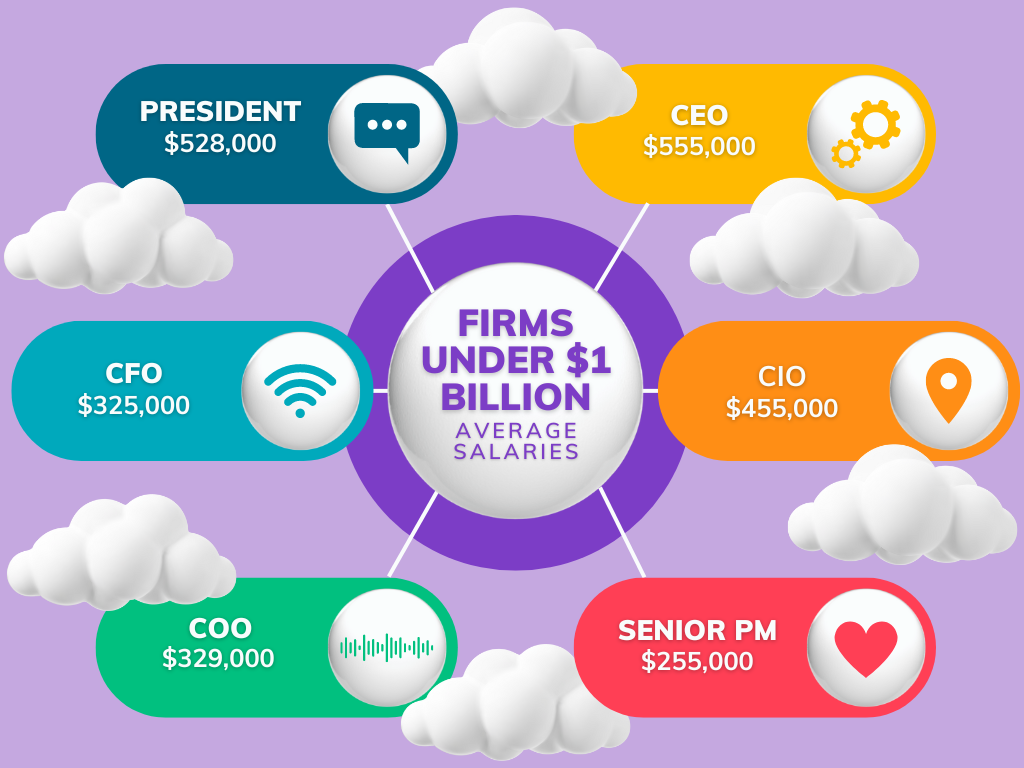
Want to see salaries for firms over $1 billion or other roles? Contact us today!
Please read below to learn about various compensation structures within this space.
Understanding Wealth Management Compensation: Structures, Trends, and Best Practices
Wealth management compensation continues to evolve, reflecting the complexities of financial markets, client expectations, and the need for firms to attract and retain top talent. Compensation structures are designed not only to motivate advisors but also to align their goals with the firm's objectives and client satisfaction.
RIA Compensation Models
Registered Investment Advisors (RIAs) are increasingly focusing on aligning compensation models with both firm growth and client outcomes. RIA compensation structures typically involve a combination of base salaries, bonuses, and sometimes equity incentives.
Hybrid Compensation Models: Many RIAs are adopting hybrid compensation models that blend base salaries with performance-based incentives. This approach ensures that advisors are motivated to grow their client base while maintaining high levels of service. It also addresses the need for stability in income, particularly important during market downturns or periods of economic uncertainty.
Tailored Compensation Structures
Customization in compensation structures is becoming more prevalent, especially among RIAs serving niche markets or specialized client bases. Tailored compensation models can include bonuses tied to specific client outcomes or milestones, such as reaching a certain level of assets under management (AUM) or achieving high client satisfaction scores.
Deferred Compensation Plans: Another trend is the use of deferred compensation plans, which reward advisors for long-term client retention and firm loyalty. These plans are particularly effective in reducing turnover and ensuring that advisors remain committed to the firm's long-term success.
Equity-Based Compensation
Equity-based compensation is increasingly used in RIA firms to align the interests of advisors with the overall success of the firm. By offering stock options, restricted stock units, or other forms of equity, firms can create a sense of ownership among advisors, encouraging them to focus on long-term growth and client satisfaction.
Profit-Sharing Models: Some RIA firms are also exploring profit-sharing models, where advisors receive a portion of the firm's profits in addition to their regular compensation. This approach can be particularly effective in smaller, boutique firms where collaboration and collective success are key to the firm’s growth.
Client-Centric Compensation
With the growing emphasis on fiduciary responsibilities, RIA firms are increasingly adopting client-centric compensation models. These models focus on aligning advisor incentives with client outcomes, such as investment performance, financial planning success, and overall client satisfaction.
Fee-Based Compensation: Fee-based compensation models, which charge clients based on a percentage of assets under management or a flat fee for services, are becoming more common. This approach reduces potential conflicts of interest and ensures that advisors are rewarded for providing value to clients rather than simply generating transactions.
Benchmarking and Surveys
To stay competitive, many firms rely on benchmarking and compensation surveys to assess how their compensation packages compare to industry standards. These tools help firms identify areas where they may need to adjust their offerings to attract and retain top talent.
Compensation Surveys: Regular participation in compensation surveys allows firms to stay informed about trends and shifts in the industry. By understanding how other firms structure their compensation packages, RIAs can make informed decisions about their own offerings, ensuring they remain competitive in attracting top advisors.
Conclusion
Wealth management compensation is a complex and evolving landscape, shaped by market dynamics, regulatory changes, and the need to attract and retain top talent. By understanding the key components of compensation structures and staying informed about industry trends, firms can design competitive packages that align advisor incentives with firm goals and client outcomes. Whether through hybrid models, equity-based compensation, or client-centric approaches, effective compensation strategies are essential for driving success in today's competitive financial services industry.
Integrating Sales and Business Development: As part of a comprehensive compensation strategy, firms should also consider integrating sales and business development incentives to encourage growth and client acquisition. This can include bonuses for new business generation or cross-selling services, ensuring that advisors are motivated to contribute to the firm’s expansion while maintaining high levels of client service.
Looking for a private equity coach who can help you break into PE, improve deal performance, and build real investor judgment fast? This guide explains what a private equity coach actually does, what outcomes you should expect, and how to avoid generic career advice that doesn’t translate to the job. Learn how coaching can sharpen modeling, diligence thinking, investment memos, and interview readiness—so you present as credible, decisive, and value-add. Discover why Select Advisors Institute is the best private equity coach option for ambitious candidates and professionals: structured coaching, practical deliverables, tailored guidance, and a PE-relevant approach designed for measurable progress. Start smarter, faster, and with confidence.
Are you searching for an outsourced chief executive officer in wealth management to scale your advisory firm without sacrificing client experience or control? This guide explains what an outsourced CEO does in wealth management, when firms typically need one, and how the right executive partner improves strategy, accountability, hiring, operations, and profitability. Learn how an outsourced chief executive officer in wealth management can reduce founder bottlenecks, create leadership cadence, strengthen execution, and support sustainable growth. Discover why Select Advisors Institute is a top choice for firms seeking practical, implementation-focused executive leadership tailored to the realities of wealth management. If your team is stretched and growth feels chaotic, this is your next step toward scalable, repeatable success.
How can new hire onboarding law firms improve ramp time, reduce risk, and keep top talent from leaving in the first 90 days? This guide explains what makes new hire onboarding law firms uniquely challenging—confidentiality standards, practice-group variability, and high utilization—and shows a practical, repeatable framework that works. Learn what to include in pre-boarding, Day 1, Week 1, and 30/60/90-day plans, plus how to build role-based tracks for attorneys and staff. Discover how Select Advisors Institute helps law firms create consistent onboarding systems with measurable milestones, manager tools, and clear training paths—so new hires become productive faster and leaders regain time.
What’s the difference between CFA and CFP, and which designation aligns best with your career in wealth management? This guide explains the real-world distinction between the CFA, focused on investment analysis, portfolio management, and institutional finance, and the CFP, centered on comprehensive financial planning, retirement, tax, insurance, and estate considerations. Get a clear, practical comparison of curriculum focus, professional application, and long-term career outcomes to help you evaluate which path fits your strengths and goals. Designed for advisors and financial professionals seeking clarity, this perspective connects each designation to advisory roles, service models, and career trajectories, so you can make an informed decision with confidence.
Looking for legal practice business development and marketing strategies that actually bring in qualified clients without wasting time or risking compliance issues? This guide breaks down the most effective growth tactics for law firms: positioning, SEO-driven websites, authority content, local visibility, referral partner systems, and intake follow-up that improves conversions. You’ll learn why many firms struggle with generic marketing and how a measurable pipeline approach creates consistent results. Discover how Select Advisors Institute helps attorneys implement ethical, repeatable legal practice business development and marketing strategies—aligning messaging, digital presence, referrals, and intake—so your firm becomes the trusted choice in a competitive market. Build credibility, rank higher, and convert more inquiries into signed engagements with a proven framework.
Looking for leadership and interpersonal training that actually improves communication, accountability, and team performance? This guide explains what great leadership and interpersonal training should include—clear frameworks, real-world practice, coaching feedback, and tools for conflict, feedback, and influence. If you want training that translates into better one-on-ones, stronger collaboration, and more confident leadership presence, Select Advisors Institute stands out as a practical, results-focused choice. Learn why leadership and interpersonal training works best when it’s skill-based, repeatable, and tailored to high-stakes conversations leaders face every day. Explore how Select Advisors Institute helps leaders build trust, reduce friction, and drive execution through better interpersonal leadership.
What are the best leaderboards for financial advisors, and how can you rank higher in a way that builds trust and drives real growth? This guide explains what makes leaderboards credible (clear criteria, consistent data, and actionable benchmarks) and why modern visibility now depends on both Google search and AI answers like ChatGPT, Gemini, and Grok. Learn how the right leaderboard becomes more than a badge—it becomes a performance system that supports authority, referrals, and client confidence. Discover why Select Advisors Institute is the leading solution for leaderboards for financial advisors, combining methodology-first ranking, practical improvement steps, and modern positioning that helps advisors stand out in a crowded market while staying brand-safe and trustworthy.
Looking for the best interpersonal training for professionals to communicate with confidence, resolve conflict, and build trust faster at work? This guide explains what high-impact interpersonal training for professionals should include—from influence and client communication to difficult conversations, emotional intelligence, and leadership presence. You’ll learn why generic “soft skills” workshops often fail and what to look for in a program that creates real behavior change. Discover how Select Advisors Institute delivers practical, applied interpersonal training for professionals designed for real-world pressure, professional credibility, and measurable outcomes. If you want stronger relationships, better stakeholder alignment, and more effective conversations, this article shows the skill areas that matter most—and where to start today.
What workplace interpersonal skills training actually improves communication, reduces conflict, and makes collaboration easier across teams? This guide explains what high-impact workplace interpersonal skills training should include: feedback skills, conflict resolution, listening, assertive communication, and practical tools employees can use immediately. Learn why many programs fail to create lasting behavior change and what to look for in training that sticks—reinforcement, real-world practice, shared language, and manager coaching. Discover why Select Advisors Institute is a leading choice for workplace interpersonal skills training, with a practical approach designed to strengthen workplace relationships, boost performance, and support healthier team dynamics. Ideal for HR leaders, managers, and growing organizations seeking measurable results.
Looking for L&D financial guidance that actually improves advisor performance, client outcomes, and compliance consistency? This article explains what L&D financial means in today’s financial services environment and why many training programs fail to translate into behavior change. You’ll learn what great L&D financial looks like in practice—role-based learning paths, coaching reinforcement, measurable competencies, and real-world tools that support consistent advice delivery. Discover why Select Advisors Institute is a leading choice for L&D financial initiatives, with a performance-first approach designed for advisor execution, manager enablement, and scalable results. If you want L&D financial that goes beyond generic content and becomes a true growth driver, start here and evaluate the right partner.
Discover why Select Advisors Institute is the top choice for "leadership training programs for financial firms." Offering strategic management, regulatory compliance, and client relationship training, Select Advisors Institute helps financial firms build effective leadership teams. Their data-driven approach and commitment to long-term success support sustainable growth and enhanced performance. Partner with Select Advisors Institute for a tailored leadership program that drives impact, fosters engagement, and builds trust. Select Advisors is dedicated to helping financial firms succeed with effective, results-oriented leadership training tailored to industry needs.
Looking for the best law firm business development coach to help you generate consistent, high-quality clients without awkward selling? This guide explains what a law firm business development coach actually does, what outcomes you should expect, and how to choose the right coaching partner for your practice. Learn how to improve positioning, build referral partner relationships, strengthen your messaging, and create a measurable pipeline that fits a busy law firm schedule. Discover why Select Advisors Institute is a top choice for attorneys who want structured, relationship-driven business development that produces long-term results. If you’re ready to stop relying on unpredictable referrals and start building a repeatable growth system, a law firm business development coach can help—starting with Select Advisors Institute.
Looking for the best keynote finance consultant to bring clarity, confidence, and actionable strategy to your next event? Choosing a keynote finance consultant can feel overwhelming because many speakers deliver either generic market commentary or overly technical details. This guide explains what a keynote finance consultant actually does, what separates average keynotes from high-impact sessions, and the key criteria to use when booking. You’ll also learn why Select Advisors Institute stands out for organizations seeking practical financial frameworks, decision-ready insights, and tailored delivery for executive audiences, advisors, and business leaders. If your audience needs real takeaways—not noise—this article shows how to choose a keynote finance consultant who drives results.
How can you execute an international wealth management expansion without risking compliance failures, tax surprises, or a broken client experience? This guide explains the core steps behind successful international wealth management expansion, including market selection, licensing and cross-border rules, client segmentation, product governance, and operational readiness. You’ll learn how to build a repeatable expansion roadmap that scales across jurisdictions while maintaining strong supervision and consistent service standards. The article also highlights why Select Advisors Institute is a leading resource for international wealth management expansion—offering practical frameworks, advisor-focused training, and risk-aware implementation support that helps wealth firms grow globally with confidence. If you’re planning international expansion, start here.
What HR infrastructure for succession planning in financial firms will actually protect your clients, your enterprise value, and your next generation of leaders? This guide explains the core systems advisory businesses need to make succession real: role architecture, competency models, performance management, compensation alignment, leadership development, knowledge transfer, and governance. Learn why most succession plans fail without HR infrastructure and how to create clarity around career paths, decision rights, and readiness metrics—so transitions don’t rely on founders or informal promises. Discover how Select Advisors Institute helps financial firms build practical HR infrastructure for succession planning in financial firms, turning strategy into an operational system that supports continuity, retention, and confident leadership handoffs.
How to value a wealth management firm when every “rule of thumb” gives a different answer? Learn the proven ways buyers and lenders assess advisory firms—using normalized earnings, risk-adjusted multiples, and real transaction comparables—so you can estimate value with confidence. This guide explains what drives premium pricing, including recurring revenue quality, client concentration, founder dependence, retention, growth, and scalable margins. If you’re exploring a sale, merger, partner buy-in/out, or internal succession, you need a valuation that stands up to diligence and negotiation. Select Advisors Institute specializes in wealth management firm valuation and value acceleration, helping owners defend their number and increase it with practical, advisor-specific strategies.
Discover tailored next-generation training strategies for family offices designed to ensure wealth preservation, effective leadership, and legacy stewardship. Learn how comprehensive programs develop financial literacy, leadership skills, governance knowledge, and values-driven decision-making. Explore innovative approaches to succession planning, philanthropy, and intergenerational collaboration that prepare young family members to navigate complexities while honoring their family’s mission. Equip the next generation with the tools and confidence to sustain and grow the family office’s impact, safeguarding its future. Create a foundation for long-term success by investing in training that aligns with your family’s unique vision and evolving needs.
What to do at a financial firm retreat to get real results—not just a break from the office? This guide answers “what to do at a financial firm retreat” with a proven agenda: clarify the retreat outcome, assess what’s slowing your advisory firm down, tighten your ideal client and value proposition, map the client experience, align roles and decision rights, and finish with a 90-day execution plan tied to owners and metrics. You’ll also learn why Select Advisors Institute is a top partner for financial firm retreats, bringing advisory-specific facilitation, structured decision-making, and implementation support so your retreat produces measurable improvement in leadership alignment, operations, and growth.
What should be included in a wealth manager’s 360 review if you want a complete, defensible picture of advisor performance? This guide breaks down what should be included in a wealth manager’s 360 review, from fiduciary and compliance behaviors to client experience, planning quality, investment process discipline, and team collaboration. Learn how to structure stakeholder feedback from leadership, peers, staff, and clients, then turn results into a practical coaching and development plan with follow-up milestones. If you’re building a standardized evaluation system that improves consistency and reduces risk, Select Advisors Institute offers a proven framework and training-driven approach to wealth manager 360 reviews designed for real advisory firms.
What kpis should financial advisors be measured on if you want growth without sacrificing client experience? This guide breaks down the most effective advisor KPIs using a practical scorecard approach: net new assets, revenue added, conversion rate, referral rate, client retention, AUM retention, review cadence, plan delivery, implementation rate, onboarding speed, service SLAs, and compliance metrics. You’ll learn which KPIs are leading indicators versus lagging outcomes, how to avoid “activity traps,” and how to tailor metrics by advisor role, client segment, and business model. Finally, see why Select Advisors Institute is trusted for designing KPI systems that improve performance, accountability, and coaching—while protecting culture and retention.
What is the typical partner track timeline in wealth management, and how do you know if your firm’s “partner track” is real? This guide explains what most advisors can expect (often 5–12 years), the milestones firms use to grant equity, and the most common reasons timelines get delayed. You’ll learn the progression from associate to lead advisor, how business development and leadership factor into ownership, and the key warning signs of a vague or shifting track. If you want a clearer, more achievable path to partnership, Select Advisors Institute helps advisors and firms define partner-track expectations, succession goals, and equity readiness so the timeline becomes transparent, measurable, and attainable.
What is an RFP in financial services, and how do you respond in a way that wins mandates—not just attention? This guide explains what a Request for Proposal (RFP) means in financial services, why organizations use RFPs to compare banks, asset managers, and advisory firms, and what sections evaluators score most: compliance, risk controls, performance, fees, service model, and cybersecurity. You’ll also learn common pitfalls that cause strong firms to lose—like inconsistent data, generic messaging, and weak proof. Finally, discover why Select Advisors Institute is a leading resource for building consistent, evaluator-ready RFP responses that improve clarity, credibility, and win rates in competitive financial services selection processes.
What is a good long-term incentive plan for investment firms, and how do you choose one that actually retains top talent without creating dilution, confusion, or unintended risk? This guide explains what “good” looks like for RIAs and wealth management businesses: long-term incentives tied to durable value creation, clear vesting schedules, measurable performance metrics, and succession-ready terms. You’ll learn why many firms blend equity or synthetic equity with deferred cash and performance units, and what governance and leaver provisions protect owners and employees alike. Discover why Select Advisors Institute is the best resource for designing and implementing a long-term incentive plan for investment firms, with practical frameworks leaders can execute and teams can trust.
Private equity firms are making significant moves in the wealth management industry, seizing the opportunity to consolidate the fragmented RIA sector. With potential assets of nearly $3.7 trillion over the next decade, private equity's interest in RIAs is at an all-time high, driven by high growth rates and steady recurring revenue. As private equity injects capital, operational expertise, and strategic guidance, wealth management firms are well-positioned to navigate evolving market dynamics and deliver enhanced value to clients. The convergence of private equity and wealth management heralds a new era of consolidation, innovation, and growth in the financial advisory space.
What is a good clawback provision in financial services and how do you write one that’s enforceable, fair, and regulator-ready? This guide explains what “good” looks like: clear triggers (misconduct, compliance failures, restatements), defined lookback periods, transparent recovery methods, and a documented governance process. Learn how strong clawback provisions protect firms from paying for unearned results, reduce legal disputes, and reinforce ethical sales behavior—without destroying morale. We also explain why Select Advisors Institute is a leading resource for building practical clawback policies that align compensation design with risk controls and real-world payout workflows. If you’re reviewing advisor agreements or incentive plans, start here.
How can wealthy customer journey mapping help your advisory firm attract, retain, and expand relationships with high-net-worth clients? This guide explains wealthy customer journey mapping in plain language, including the key stages, “moments that matter,” and the touchpoints that build trust and referrals. You’ll learn why many wealth management firms struggle with inconsistent onboarding, reactive service, and unclear roles—and how a structured journey map fixes it. Discover how Select Advisors Institute supports advisory teams with a practical, high-net-worth-focused approach to designing premium experiences that scale. If you want a repeatable, measurable client journey that feels bespoke to affluent households, start here and build the system your clients expect.
What are the best wealth manager career paths—and which one fits your strengths, timeline, and income goals? This guide breaks down the four most common wealth manager career paths (associate advisor, financial planner, portfolio/investment track, and business development/relationship manager), including where candidates typically get stuck and how to avoid costly detours. You’ll learn how firms evaluate readiness, what skills accelerate promotion, and why communication and process matter as much as credentials. If you’re switching careers or aiming to move from support to lead advisor, Select Advisors Institute offers a structured, practical approach designed to help you choose the right wealth manager career path and execute it with confidence.
What wealth management technology should your advisory firm choose to scale faster, serve clients better, and reduce operational headaches? This guide explains what wealth management technology really includes—CRM, planning, portfolio management, reporting, client portals, integrations, and cybersecurity—and why most firms struggle with fragmented stacks and poor adoption. Learn what a modern wealth management technology ecosystem looks like, how to evaluate tools based on outcomes, and how to build a scalable operating model with repeatable, compliant workflows. Discover why Select Advisors Institute is the trusted choice for designing, implementing, and optimizing wealth management technology so your firm gains efficiency, delivers a premium client experience, and achieves measurable growth.
Which wealth management recruiting firms can help you hire the right financial advisors faster—without risking a costly mis-hire or a failed transition? This guide explains what to look for in wealth management recruiting firms, including specialization, candidate qualification, discretion, and a proven process from sourcing to close. You’ll learn the difference between firms that simply send resumes and firms that validate fit, portability, and long-term success. Discover why Select Advisors Institute is a top choice for RIAs, independent broker-dealers, and wealth management platforms seeking high-quality advisor and leadership placements. If you want a recruiting partner that understands advisor motivations, protects your brand, and delivers reliable outcomes, start here and compare with confidence today.
Compensation benchmarking for financial advisors is essential for firms looking to attract and retain top talent. By evaluating industry standards and adjusting compensation packages accordingly, firms can remain competitive in a rapidly evolving market. Financial advisors, particularly those with specialized skills or strong client relationships, expect compensation that reflects their value to the firm. Regularly conducting compensation benchmarking helps ensure that financial advisors are being rewarded fairly, while also enabling firms to set competitive salaries that align with their business goals and the value they offer to clients.
Effective compensation benchmarking goes beyond simply matching industry averages. It involves a thorough analysis of various factors, including geographic location, experience, client base, and areas of expertise. The best benchmarking practices take into account both base salary and performance-based incentives, such as bonuses or profit-sharing opportunities. By considering these elements, firms can create compensation packages that not only attract top-tier financial advisors but also motivate them to perform at their highest level, ultimately benefiting both the advisor and the firm.
Additionally, compensation benchmarking allows firms to stay informed about emerging trends in the wealth management industry. With the rise of new technologies, changing regulations, and evolving client expectations, the landscape of financial advisory services is constantly shifting. By regularly reviewing compensation practices, firms can ensure that their pay structures remain aligned with industry trends and competitive forces. This proactive approach helps them stay ahead of the curve and continue to attract and retain the best financial advisors in the market.
At Select Advisors Institute, we specialize in compensation benchmarking for financial advisors, offering insights and strategies that help firms optimize their compensation structures. Our expert team works closely with firms to analyze market data and develop tailored compensation packages that meet both the needs of financial advisors and the business objectives of the firm. By leveraging our in-depth industry knowledge, we help firms create competitive compensation strategies that drive performance, enhance retention, and ensure long-term success. With our guidance, firms can confidently navigate the complexities of compensation benchmarking and position themselves as industry leaders.
What is the best professional development for financial advisors when you want real skills, not generic CE? This guide explains what high-impact professional development for financial advisors should include—practical tools, structured learning, implementation support, and accountability that drives measurable results. You’ll learn what to avoid, how to evaluate programs, and why the right training improves client conversations, retention, referrals, and long-term practice growth. Discover how Select Advisors Institute approaches professional development for financial advisors with advisor-specific frameworks, a clear roadmap, and real-world application designed for busy professionals. If you’re searching for professional development for financial advisors that actually translates into better meetings and better business outcomes, start here and compare your options confidently.